Selected work 03
Role
UX/UI Designer
Category
Wellness
year
2026
Type
E-commerce
Context
People don't know what they need. Products look similar, health claims sound the same, and there's no salesperson to ask. Most users browse, hesitate, and leave. Noura Labs needed a purchase experience that does the job of that salesperson — guiding users to the right product without friction or overwhelm.
Brand direction
Science-backed but never cold. The brand needed to feel trustworthy without feeling clinical — warm enough to belong in a morning routine, credible enough to justify the price. Clean layouts, soft neutrals, generous whitespace. Every screen designed to calm the decision, not rush it.

Design decisions
Quiz
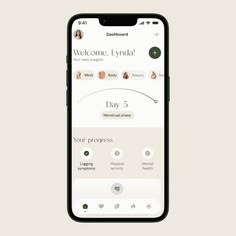
The quiz replaces aimless browsing with a 2-minute guided path. Users answer by symptoms and goals — the language they already use — and land on exactly the right product.
Product page
Price, discount, subscription options and key benefits visible without scrolling. The add-to-cart moment stays confident and uninterrupted.
Subscription
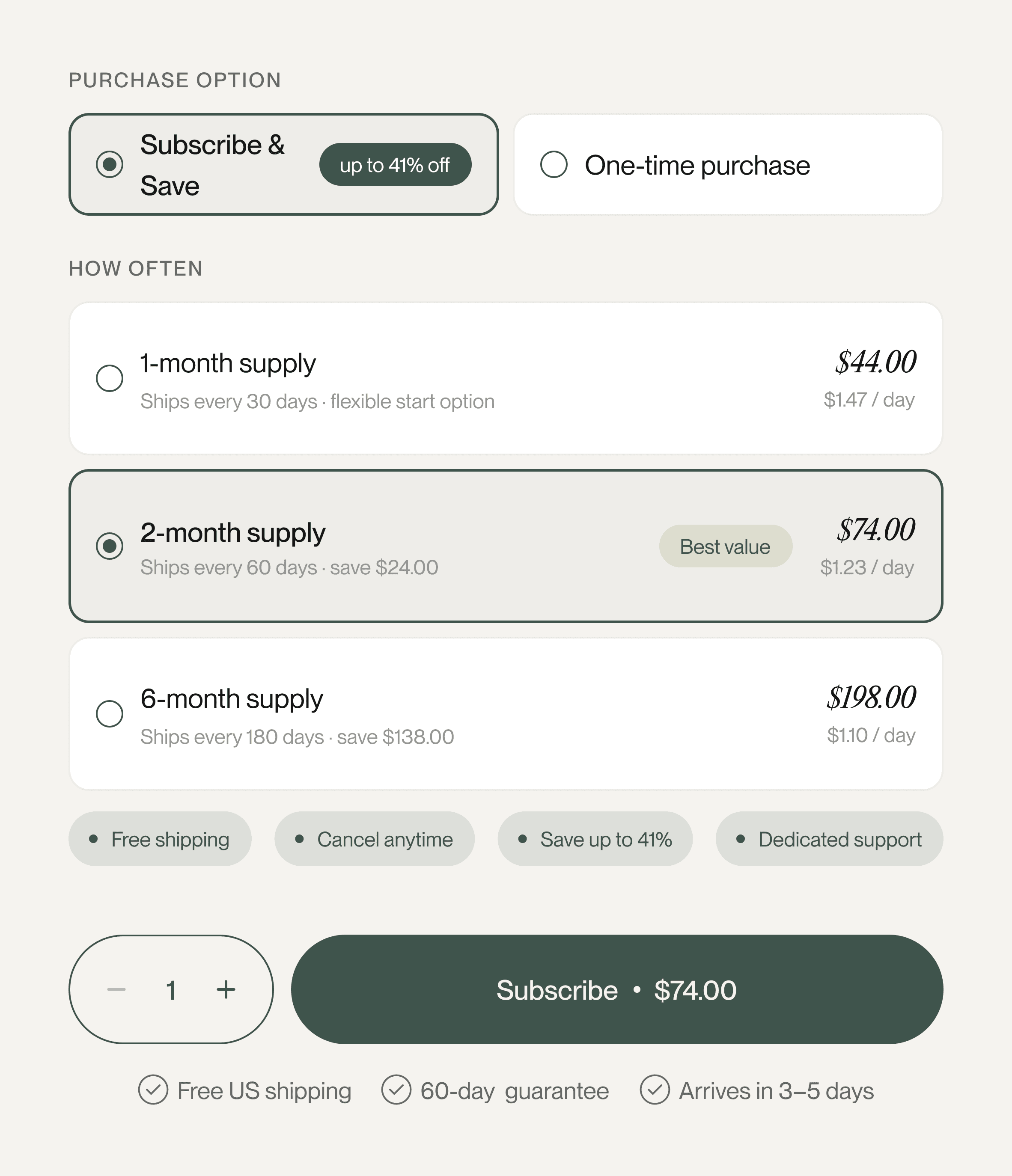
Frequency options became the main selector. One-time purchase moved below an "or" divider — still accessible, no longer competing. One layout change with a clear conversion logic behind it.
Cart
A single recommended product, a free shipping progress bar, and a persistent checkout button. Nothing competes with completing the purchase.

Beyond screens
A UI kit with organized color tokens, typography scale and reusable components — structured and documented with Claude Code. Packaging concepts developed using AI generation and Adobe Illustrator.


WHAT I REVISED
After mapping the full purchase flow, I revisited the subscription section. The first version felt logically correct but visually weak.
Before
Two options at the top, equal visual weight. Users had to decide between subscribe and one-time before even picking a frequency — two separate decisions presented as one step. Equal treatment signals equal value, which creates hesitation.
After
Frequency selector becomes the main action. One-time purchase moves below an "or" divider. Perks visible at the moment of decision. One path is clearly preferred — the other is still accessible.

Why it matters
When users face two equally weighted options, conversion drops. Research by CXL Institute shows that reducing visual competition between options can increase purchase completion by 15–20%. The change doesn't remove choice — it removes the hesitation that comes from presenting every option as equally important.
Reflection
Designing a supplement store made one thing clear: confusion is the biggest competitor. If a user doesn't understand what a product does in the first 10 seconds, no amount of beautiful design saves the conversion.

Visual equality creates hesitation. When everything looks equally important, nothing feels like the obvious next step. The subscription redesign proved that.